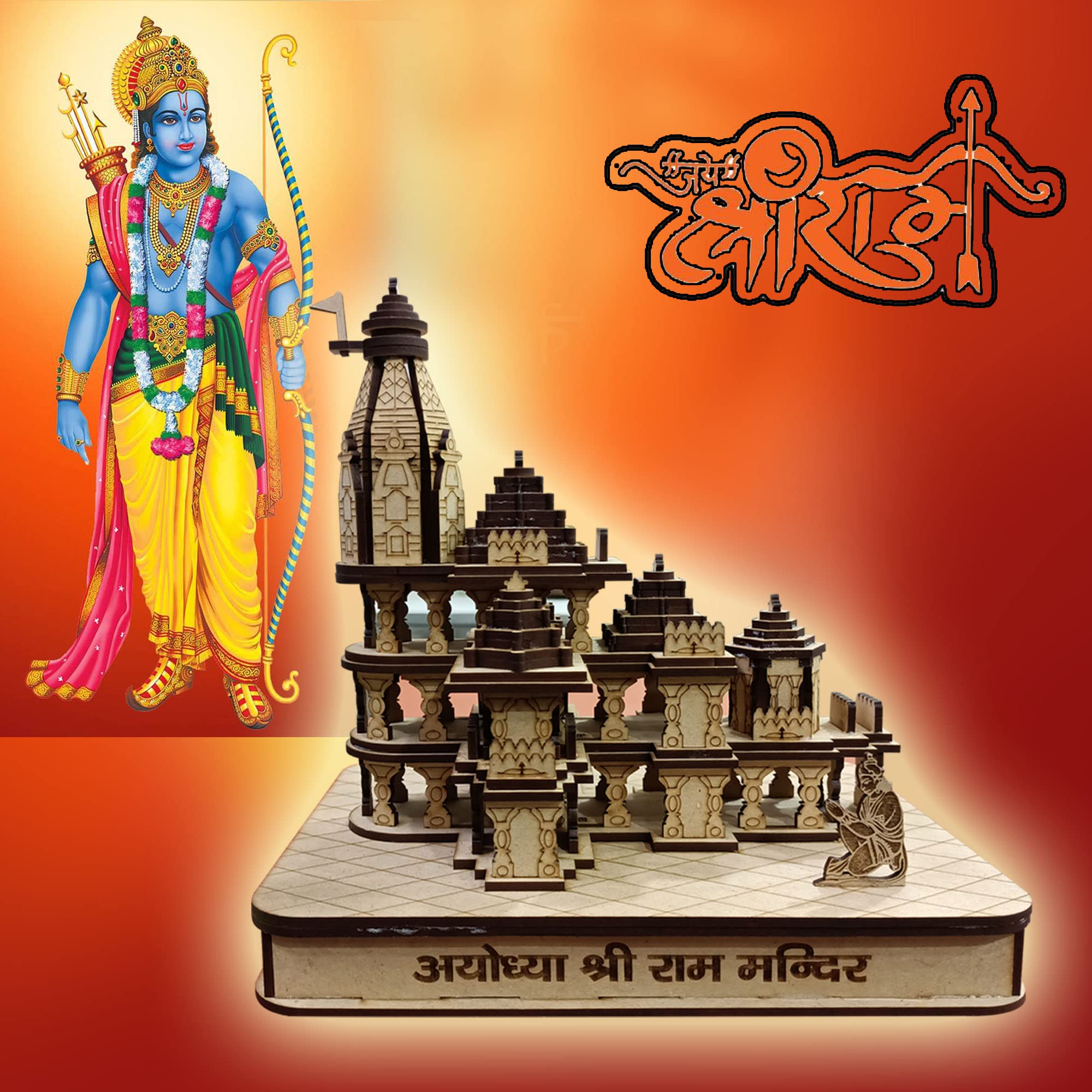
Part 2 – Ram Mandir Civilizational victory
As the nation gears up for the inauguration of the Bhavya Ram Mandir in Ayodhya, we are releasing a series of Blogs capturing this journey over the period of 500 years and what this means to us as a Civilization. Quoting one of my favorite author- Amish’s lines, that got me contemplating- “India is the only pre-bronze age culture that is alive and breathing. Every other ancient culture — our fellow travelers in the past — is either forgotten or its husk lives on in museums. This happened largely because they were overpowered and overwritten by themselves and sometimes, enemies- time being the biggest of them all”.

Here is a quick glimpse of the timeline capturing various events leading up to the Pran-Prathishta ceremony today. From the tumultuous 1500s to till date, there have been several seers, sages, kings, karsevaks, personalities – many known and unknown who have fought to bring this Historical day to life. We have tried to capture, as many significant events to the best of our knowledge and references.
1525: Babur invades north of India and takes over a substantial part.
1528: One of his generals, Mir Baqi ,comes to Ayodhya, destroyed the temple in 1528 and built a mosque in its place, which is named after the ruler, Babri Masjid (Babur’s Mosque).
1766-1771- The Jesuit missionary Joseph Tiefenthaler, who visited the site between 1766-1771, wrote that either Aurangazeb (last prominent Mughal Ruler) or Babur had demolished the Ramkot fortress, including the house that was considered as the birthplace of Rama by Hindus. He further stated that a mosque was constructed in its place, but the Hindus continued to offer prayers at a mud platform that marked the birthplace of Rama.
1859: British colonial administration erects a fence to separate the places of worship, allowing the inner court to be used by Muslims and the outer court by Hindus.
1885: The first case was filed in January 1885 in the Court of the Sub-Judge, Faizabad, by Mahant Raghubir Das against Lord Woodhouse. Mahant’s plea was rejected by the British.
1949-50: Gopal Singh Visharad filed a case seeking rights for performing puja to the idol from the Janmasthan. The court issued a temporary approval for pooja. On 24 April 1950, the State of Uttar Pradesh, appealed against the order.
On 5 December 1950, Paramhans Ramchandra Das, head of the Ramjanmabhoomi Nyas (Rama Birthplace Temple Trust), filed a case seeking continuation of puja.
1959-61– Nirmohi Akhara filed a case seeking possession of the site, as the custodian of Janmabhoomi. On 18 December 1961, the Uttar Pradesh Sunni Central Board of Wakfs claimed the mosque and the adjoining land, and demanded the removal of the idols.
1986: On 1 February 1986, the district judge directed that the gates of the structure be unlocked for Hindu worshippers. The same year, Babri Masjid Action Committee was set up to protest against the decision.
1989: Former VHP vice-president and a retired judge of the Allahabad High Court, Deoki Nandan Agarwal, filed a case on 1 July 1989 at the Allahabad High Court in the name of Bhagwan Ram Lalla Virajman (Ram lalla). On 14 August 1989, Allahabad High Court ordered maintenance of status quo at the site.
1990– Ratha Yatra organized from Somnath to Ayodhya to garner support for the Ram Mandir.
1992: The structure at the disputed site was demolished on 6 December 1992. President’s rule is imposed.
1993-1996– Court proceedings at Allahabad high court recording oral evidence.
2002-05: 3 High Court judges began hearing the case in April 2002 to determine who the site belongs to and directed the Archaeological Survey of India (ASI) to excavate it to find if a temple existed in the area as claimed by the Hindus. The ASI begins work in June 2003 and found the claim to be true.
2003 ASI Excavation: The summary of the ASI report signified concrete proofs of a temple under the mosque. The excavations yielded:
Stone and decorated bricks as well as mutilated sculpture of a divine couple and carved architectural features, including foliage patterns, amalaka, kapotapali, doorjamb with semi-circular shrine pilaster, broke octagonal shaft of black schist pillar, lotus motif, circular shrine having pranjala (watershute) in the north and 50 pillar bases in association with a huge structure.
In March 2003, the Supreme Court disallows all religious activity at the acquired land.
July 2005: Suspected militants attack the disputed site, using a jeep laden with explosives to blow a hole in the wall of the complex. The situation was handled by Security forces.
2009: The Liberhan commission, which had been set up to analyse the sequence of events leading up to the demolition of the disputed structure, submitted its report to the then Prime Minister Manmohan Singh after being granted 48 extensions.
2010: The Allahabad High Court, divided the disputed land into three parts ― one-third for the Sunni Waqf Board, one-third for the Nirmohi Akhara and one-third to the party for ‘Ram Lalla’.
December 2010, the Akhil Bharatiya Hindu Mahasabha and the Sunni Waqf Board challenged the High Court’s decision in the apex court.
2016: A plea was filed in the Supreme Court on 26 February 2016 seeking construction of Ram Temple at the disputed site.
2018: The Supreme Court started hearing civil appeals in February 2018. In March, it rejected all interim pleas, including Swamy’s, seeking to intervene. In April, a plea was filed by advocate Rajeev Dhavan, who was representing some of the Muslim bodies.
2019: CJI Gogoi constituted a five-judge constitution bench to hear the appeals. The Supreme Court appointed a mediation panel to resolve the issue. After mediation proceedings failed, the court began daily hearings in the case from 6 August.
9 November 2019: The Supreme Court has given its verdict in the Ramjanmabhoomi case. The land has been allotted to Hindus for the construction of the temple. Muslims are to be allotted a separate five-acre site at a prominent location in Ayodhya for the construction of a mosque.
2020:
In August, PM Narendra Modi conducted ‘Bhoomi Puja’ in Ayodhya and launched construction of Ram Mandir.
2024 – Temple inauguration – Pran-Pratishtha of Ram Lalla.
Significant personalities that have played pivotal roles in this journey are but not limited to 25 Nihang Sikhs, Thakur Gurudutt Singh, Ashok Singhal, Jagatguru Ramabhadracharya, Dr. Iravatham Mahadevan, Dr. K.K.Mohammed, Prof. B.B Lal, LK Advani, Kalyan Singh, Lawyer Keshav Parasaran and many more unsung heroes, including karsevaks, historians, authors and personalities from different walks if life.
Part 2 – To Follow – Victory of Bhakthi, Dharma and Faith of a Civilization ……- Stay tuned.
References–
Ram and Ayodhya – Meenaskhi Jain
THE BATTLE FOR RAMA: Case of the Temple at Ayodhya, Meenakshi Jain
https://swarajyamag.com/issue/the-triumph-of-bhakti
An Indian I Am– K.K Mohammed




Leave a Reply