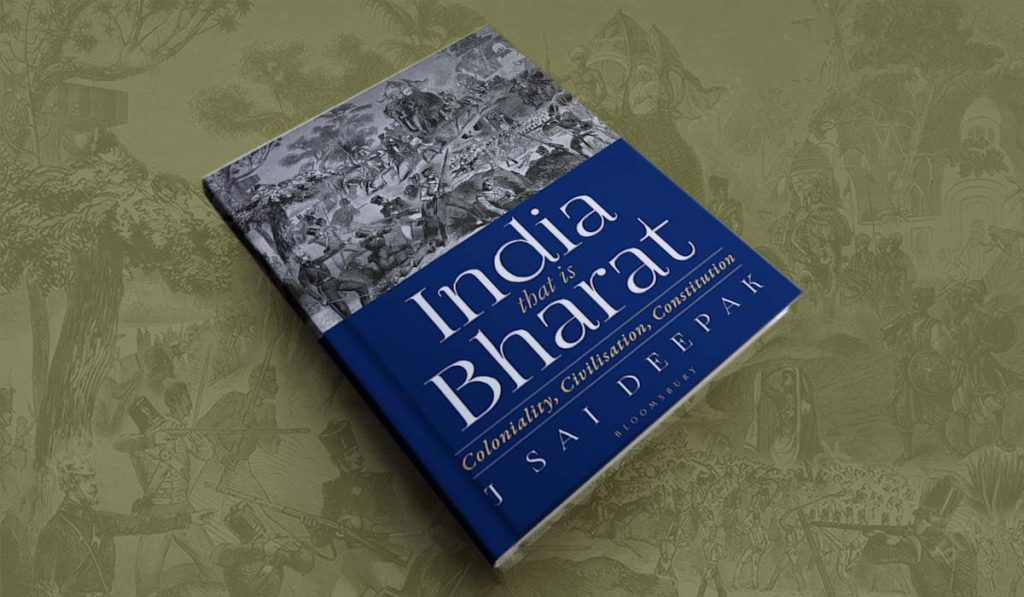
Some movies make you emotional. Some books give you a wakeup call. But when you watch Chhaava and read a book like India That Is Bharat, you realize something far worse—the battle that Shivaji Maharaj and Sambhaji Maharaj fought is still unfinished. The Mughals may have left the battlefield, but their ideological successors are still running the show.
The most gut-wrenching moment in Chhaava is the portrayal of Sambhaji Maharaj’s brutal execution at the hands of Aurangzeb. The Mughal emperor offered him a “choice”: Convert to Islam or face unimaginable torture. Sambhaji Maharaj, like a true Kshatriya, chose Dharma over life.
His body was mutilated, his eyes gouged out, his tongue cut, his limbs hacked apart—and even then, he refused to bow. This was not just a personal sacrifice, it was a civilizational message: Hindu rulers do not surrender.
Now, fast forward to 2024:
• Hindu festivals are policed, restricted and taxed while temples are still under state control.
•History books glorify Aurangzeb as a “just ruler” but conveniently forget Sambhaji Maharaj’s sacrifice.
•Hindus have to fight court cases for their own religious rights, whether it’s Ram Mandir or Sabarimala.
Watching Chhaava, the cinematic portrayal of Sambhaji Maharaj’s defiance against Aurangzeb, while reading J. Sai Deepak’s legal dissection of Bharat’s colonial hangover, feels like living in a time loop- same oppression but different rulers. The only thing that has changed is the method—where Aurangzeb used swords, today’s rulers use courts, policies and Marxist historians.

1. Coloniality: The British left, their laws stayed back like uninvited relatives
One of the biggest revelations in India That Is Bharat is that colonial rule didn’t just plunder India’s wealth—it systematically dismantled its entire intellectual framework. The British may have left in 1947, but they made sure their governing systems, educational biases and institutional strangleholds remained.
This is what Sai Deepak calls coloniality—the invisible ghost that ensures:
- • Our legal system is still based on British common law, despite its unsuitability for a civilization built on Dharma.
- • Our education system glorifies the Mughals and Nehru, while icons like Shivaji, Rana Pratap, and Rani Durgavati get token mentions.
- •Our policies are designed to seek western validation whether it’s in economics, governance, or even climate policies.
One of the biggest wake-up calls in India That Is Bharat is that 1947 wasn’t real independence—it was a political transfer.
We threw out the invaders, but kept their operating manual. Genius, right?
And while we’re on the topic of legal colonization…
2.Macaulay’s Education System: How to Create a Nation of Mental Slaves
Rulers like Shivaji Maharaj built a Maratha empire that valued indigenous knowledge, Sanskrit education, and military training rooted in Kautilyan strategy. Contrast that is today’s Macaulayite education system designed to produce English-speaking clerks rather than independent thinkers.
Sai Deepak traces this back to Macaulay’s Minute on Education (1835), which explicitly stated that the goal was to create a class of people who were “Indian in blood and colour but English in taste, opinions, morals and intellect.”
Fast forward to today, and we have:
- •Indian students who can write essays on French Revolution and Russian Communism but barely understand the Chola, Gupta, or Vijayanagara administrations.
- •The Mughal invasion is rebranded as “cultural assimilation,” while Shivaji Maharaj is reduced to a “regional warrior.”
- •Vedic sciences, Hindu jurisprudence and Dharmic traditions being dismissed as mythology, while Western thought is seen as rationality.
If Shivaji or Shambhaji Maharaj had studied in today’s school syllabus, they would be forced to write essays on Akbar’s “secular” policies and why the British “modernized” India. That is the intellectual colonization Sai Deepak warns about.
3.Temple Control: From Aurangzeb’s Destruction to Government Looting
Sambhaji & Shivaji Maharaj dedicated their lives to protecting Hindu temples across Bharat from destruction. Bharat in 2024? Temples are still under siege—only difference being the government is the looter.
- •34,000+ temples in Tamil Nadu alone are under government control.
- •Hindu temple donations are taxed, while other religious institutions enjoy full autonomy.
- •Government officials (many of whom don’t even believe in Hinduism) run temple boards, deciding how temple funds are spent.
Sai Deepak exposes this absurdity in India That Is Bharat—how temple control laws originated under the British, but were lovingly maintained by independent India. Sadly “secularism” is equated to treating Hindu religious institutions as state property.
4.The Mughal PR Agency: Leftist Historians
One of the most disturbing takeaways from Chhaava is how Sambhaji Maharaj’s legacy has been systematically erased from mainstream history.
•Aurangzeb is painted as a misunderstood ruler in our textbooks.
•Akbar is described as the “great”.
•Mughal administration gets full chapters in NCERT textbooks.
•The Marathas – just some “warlords”
•Shivaji Maharaj is called a “regional king,” and Sambhaji Maharaj barely gets a mention (maybe in a footnote).
Indian history, as told by Marxist historians, goes something like this:
- The Mughals came, saw, and civilized India.
- The British came, saw, and modernized India.
- Hindus occasionally rebelled, but only in a way that fits the “secular” narrative.
Sai Deepak, in India That Is Bharat, rips apart this colonial distortion of history. Why else do our textbooks focus on Akbar’s tolerance but ignore the Vijayanagara Empire’s brilliance? Why do they glorify Tipu Sultan while skipping over Sambhaji’s sacrifice?
Because our education system was never designed to teach history—it was designed to control the narrative.
5.Secularism: The Modern-Day Jizya Tax
If there’s one thing Sambhaji Maharaj despised, it was the Jizya tax—a financial burden imposed on Hindus, forcing them to pay for their own oppression.
In modern India, the Jizya may not exist in name but its spirit is alive and well.
Hindu institutions? Regulated, taxed, and controlled.
Hindu schools? Forced to follow the RTE Act, while minority-run schools are exempt.
Hindu temples? Their donations are redirected for “secular” purposes.
Meanwhile:
Other religious institutions? Full autonomy, zero interference.
Minority-run schools? No forced admissions, no RTE restrictions.
Hindu traditions? Always under attack in the name of progress.
Sambhaji Maharaj fought against a ruler who openly imposed religious discrimination. Today, the discrimination is bureaucratic and legal—but just as real.
6.Ayodhya: The Modern Battle for Swarajya
In India That Is Bharat, Sai Deepak describes the modern version of the battle—Ayodhya.
For 500 years, Hindus had to “prove” that Ram was born in Ayodhya.
For 500 years, Hindus were told to “move on.”
For 500 years, courts, historians and politicians did everything possible to delay justice.
If “moving on” is the solution, why do we still cry about British colonialism? Why do we still teach about Jallianwala Bagh? Why do we still discuss Partition?
Because history matters—except when it comes to Hindus reclaiming what’s theirs.
Sambhaji Maharaj shed blood to protect Dharma. The least modern Hindus can do is shed their complacency.
7.Final Verdict: Bharat Needs a Mental De-Colonization
If Chhaava is a battle cry, India That Is Bharat is the intellectual ammunition we need to reclaim what was lost. Sambhaji Maharaj fought against physical invaders, but modern Bharat needs to fight intellectual and legal invaders—the remnants of coloniality, institutionalized secularism and distorted history.
If you still believe that:
The British gave us railways out of kindness…
Aurangzeb was a tolerant king…
Secularism is neutral in Bharat…
…then you probably also believe our school textbooks are unbiased.
Read India That Is Bharat, watch Chhaava, and ask yourself:
Would Sambhaji Maharaj recognize the Bharat of today? Or would he pick up his sword again?




Leave a Reply